Just over a year ago I went to Madrid to get top surgery, a gender-affirming surgery where a person’s chest is changed to have a more masculine appearance. In this blog I’m going to take you through some of the practical realities I experienced through this process as a trans musician.
Saving and being freelance
Before top surgery, like many others my age, I didn’t have much money in savings. Surgery costs anywhere between £5k–£12k+, and that’s before the additional costs of travel and time off work, specific clothes, recovery items and gear, and getting a diagnosis of gender dysphoria (something I didn’t need, as Spain works on an informed consent model).
I am a freelancer and (like many trans people), there was an element of urgency to get surgery due to the poor mental health I was experiencing because of gender dysphoria.
I began saving through copious amounts of extra work. As a freelancer I manage my own schedule, so the year before top surgery I was doing lots of touring, taking extra commissions, teaching, running workshops and filling my diary to breaking point.
However, I didn’t realise the impact this extra work would have on my tax payments (I’m now a firm subscriber to putting 20% of each invoice aside for this!), so this was a pretty steep learning curve and something I wished I’d understood better. There are some great resources from the MU on understanding tax and national insurance payments.
Fundraising and the impact on me as a performer
One way I afforded surgery was fundraising through GoFundMe, as well as selling merch items and taking donations at gigs. I found it hard to make the decision to fundraise. In an ideal world, I’d have liked to just disappear and come back with no boobs, but I realised my mental health was suffering and I needed to ask for support.
I struggled while fundraising with a heightened sense of gender dysphoria when performing. Saying “I’m raising money so that I don’t have this big chest” felt like saying “please look at my big chest”, and I became even more aware of my body on stage. Many resources talk about heightened gender dysphoria before surgery, but I wasn’t prepared for how significantly this affected me as a live musician.
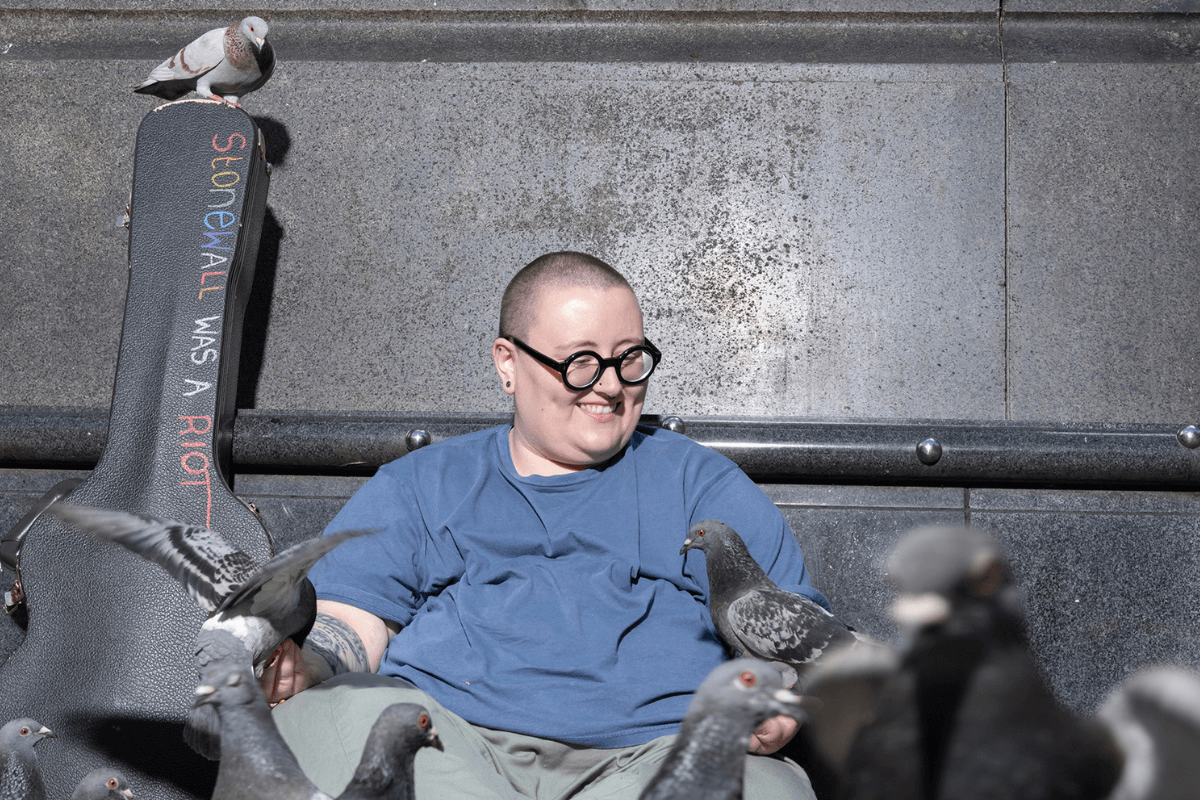 Photo: Cassey Orr.
Though I’ve always spoken about queerness at gigs and my audience tends to be lovely, fundraising invited some difficult and uncomfortable questions, and I noticed a rise in conversations about trans rights from folk with less understanding.
I was okay having these conversations most of the time, but also developed a set of phrases that shut down conversations when they felt invasive or uncomfortable. I also worked with a therapist deciding how much I was comfortable with sharing and what my boundaries were in terms of talking about my experience for activism, and the need to keep some aspects of my life and transition private while I worked them out for myself.
During my fundraising period I found that having a good network of trans people around me was important to sense-check conversations and to feel understood. Some of these folks were people I already knew as I have a lot of trans friends and colleagues, but I also found online support for others going through the processes I was.
Planning surgery around freelance work
Being a freelancer meant that I wouldn’t get sick pay during time away from work, so I chose to have my surgery in January at a time when I don’t tour and I find work tends to slow down significantly. It’s also a time when I knew my other friends (predominantly musicians and performers) had less work, so I was able to get extra support.
The general advice online states that it takes about 6-8 weeks to recover from surgery, but some people feel better sooner and for others it takes longer. I felt okay in my body pretty quickly (as I am disabled and relatively used to managing pain), however mentally I felt quite foggy and a bit slower for a while after surgery. I was also unable to carry anything heavy for about 5 months after my surgery, so though I went back on tour 7 weeks after the procedure, I needed someone to do my heavy lifting.
I took a few weeks without work, and had a reduced workload as I came back. I found the flexibility of freelancing was really helpful during this time, because I was able to do things like work from my bed and take naps throughout the day.
Playing after surgery
The only question I had for my surgeon in my pre-surgery consultation was “how long till I can play guitar?”. As a songwriter and an autistic person who uses music to regulate and communicate, I was nervous about what it would feel like to not be able to play. Unfortunately, he didn’t really know, and there wasn’t a clear guide as to when my body would be ready for me to pick up a guitar again.
I waited 3 weeks before my first time playing, and it’s my favourite post-surgery memory (above the usual ones like: first shower, first time putting on a white t-shirt, first hug).
I remember sitting in my office, my body feeling stiff and sore and playing Little Green by Joni Mitchell and feeling as if I was whole for the first time. The experience of the guitar against my flat chest, and the music almost on my body for the first time without a layer of dissociation due to dysphoria, was the most wonderful thing.
Getting any type of gender affirming surgery is really scary, and there’s a lot of fear-mongering online about the pain, risks and effects on work. And yeah, surgery is scary, and painful, but a year on from top surgery I look back on the experience with only joy and gratitude that it was something I could do.
February is LGBT+ History Month
LGBT+ History Month was founded in 2005 by the charity 'Schools OUT' to mark the anniversary of the abolition of Section 28. It is a time to celebrate LGBTQ+ culture and achievements, while remembering the struggles and activism that paved the way for progress over the years. Across schools, workplaces and organisations the month is marked by events, workshops, talks, exhibitions, and campaigns.
This year's theme is 'Science & Innovation', celebrating and recognising queer people who have contributed massively to society in the past, and who still continue to make worthwhile contributions today. Learn more from charties Schools OUT and Stonewall.